

Four ways of writing in runes
Runes were one script that changed over 1,500 years. The same signs took new shapes, names and sounds as the languages around them changed; each row below has its own page and a page for every rune.
Elder Futhark
24 runes. The Elder Futhark is the oldest runic alphabet. It has 24 runes and takes its name from the first six: f u þ a r k.…
Younger Futhark
16 runes. The Younger Futhark is the sixteen-rune row of the Viking Age. It replaced the twenty-four-rune Elder Futhark in…
Anglo-Saxon Futhorc
33 runes. The futhorc is the runic alphabet of the Anglo-Saxons and the early Frisians. It grew out of the 24-rune Elder Futhark…
Medieval runes
29 letters. The Viking Age Younger Futhark used sixteen runes for a language with many more sounds. From around the end of the…
Famous inscriptions
From a comb in a Danish bog to a lion in Venice: what each one says, how the reading was reached, and where scholars still disagree.
Rök runestone
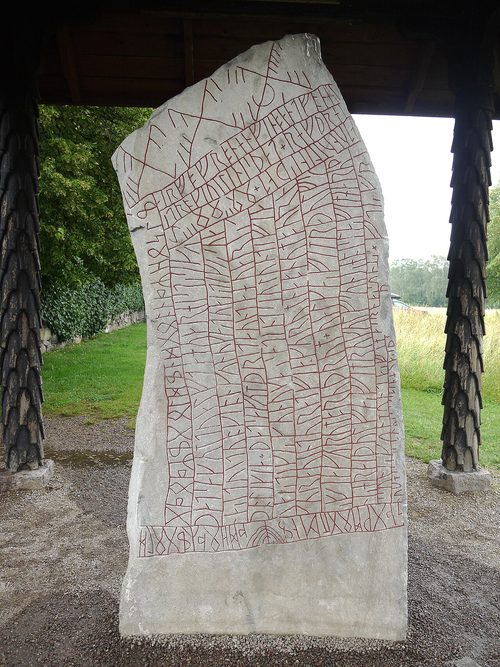
The longest runic inscription on stone, about 760 runes, raised by Varinn for his dead son in early 9th-century Sweden; its riddles are still argued over.
Younger Futhark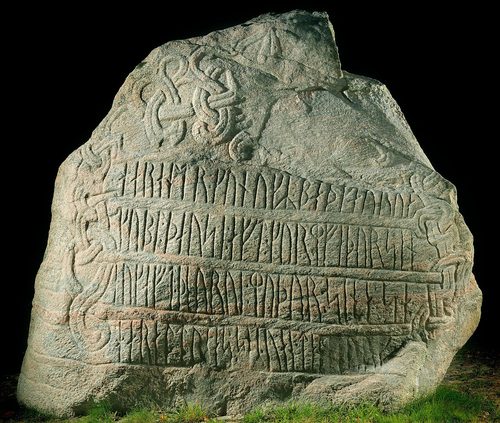
Large Jelling stone (Harald's stone)
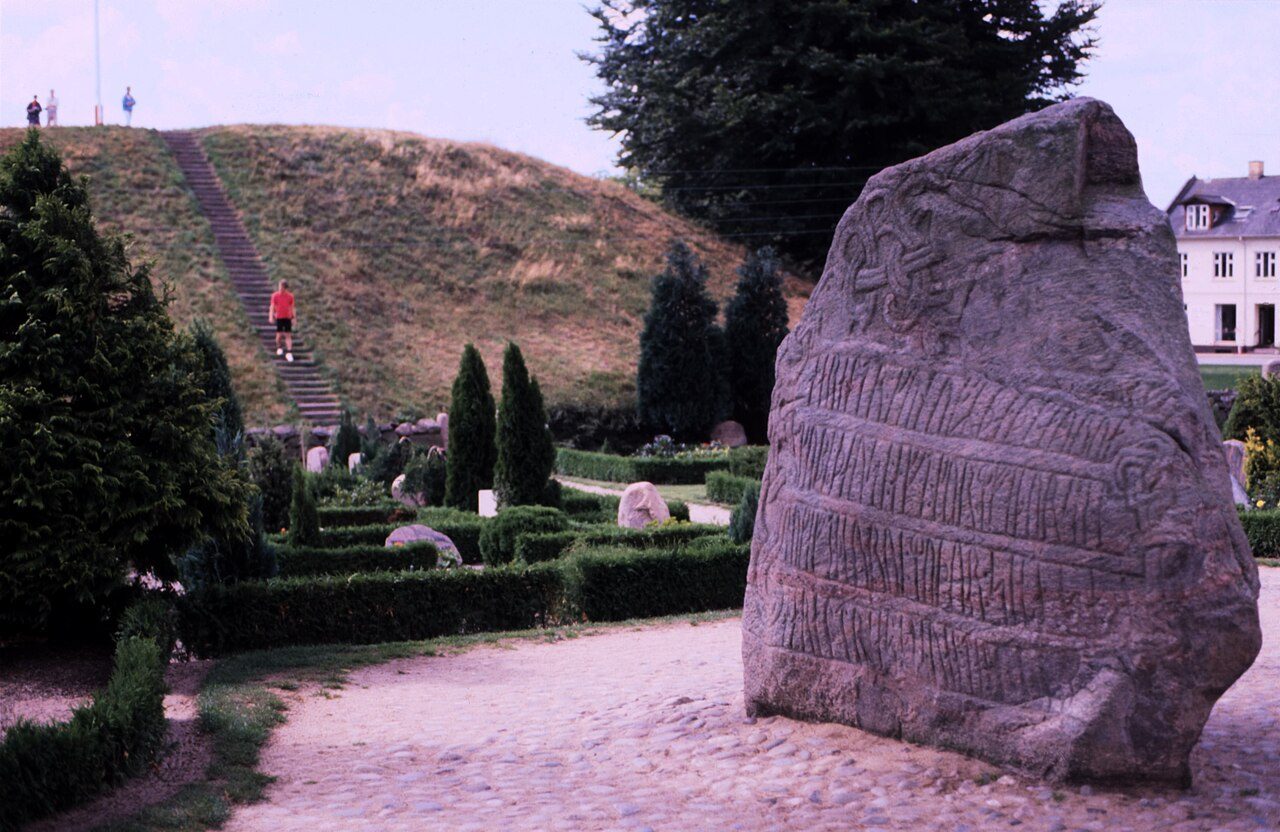
Harald Bluetooth's runestone at Jelling, c. 965–985: 'who won all Denmark and Norway and made the Danes Christian'.
Younger Futhark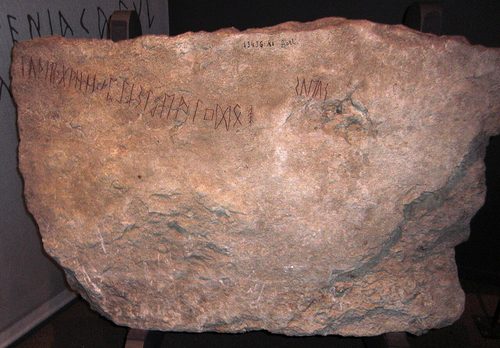
Kylver stone
A Gotland grave slab from about AD 400 carrying the oldest complete listing of the 24-rune Elder Futhark, in its own order.
Elder Futhark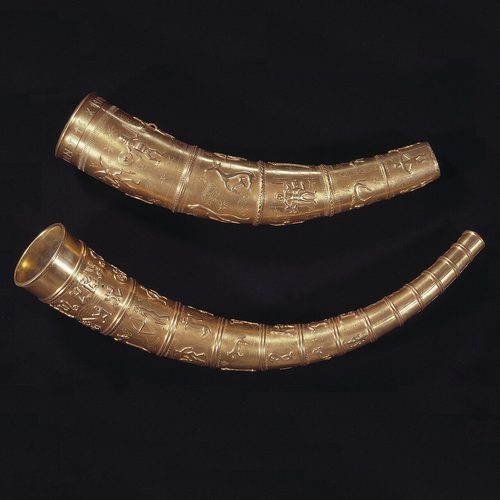
Golden horns of Gallehus
Two gold horns found in Denmark in 1639 and 1734 and melted down in 1802; one bore the line ek hlewagastiz holtijaz horna tawido.
Elder Futhark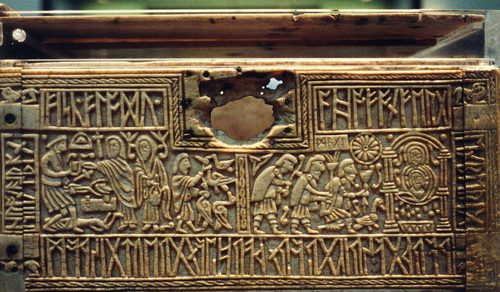
Franks Casket
An 8th-century Northumbrian box of whale bone, carved with Weland, the Magi, Rome and Jerusalem, and inscribed in runes, Old English and Latin.
Anglo-Saxon Futhorc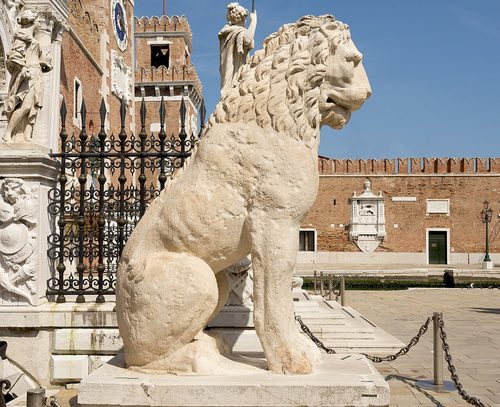
Piraeus Lion
An ancient marble lion from Piraeus, carved with runes by Scandinavians in the 11th century and taken to Venice in 1687.
Younger Futhark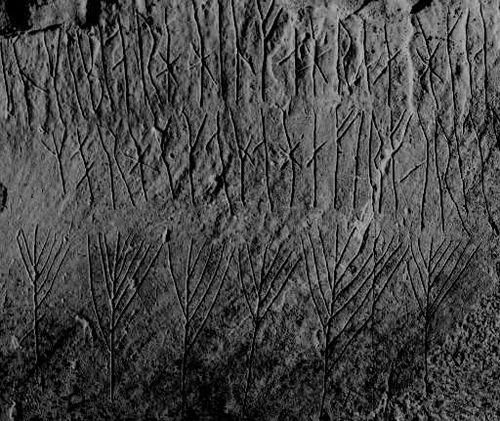
Maeshowe runic inscriptions
About thirty Norse runic graffiti cut in the 12th century inside Maeshowe, an Orkney tomb: boasts, jokes, treasure tales, crusaders.
Medieval runes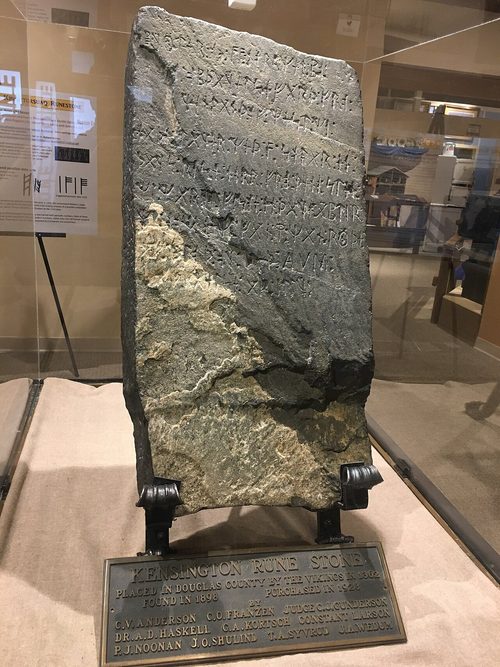
Kensington Runestone
A Minnesota stone 'found' in 1898 claiming a Norse expedition of 1362. Runologists and linguists agree it was carved in the 19th century.
19th-century creationAll 20 inscriptions, on a timeline →
Tools
Transliterator
Latin letters into each row, with the real conventions: one rune for several sounds in the Viking Age, ᛦ for the old R, no doubled letters. Every choice is explained.
Rune explorer
All 73 runes in one place, filtered by row, sound or name, with each rune's line of descent.
Read a runestone
Step through King Gormr's stone at Jelling rune by rune: find the row, read the letters, work out the words, then translate.
Background
A history of runic writing
Where the runes came from, who used them, and how they gave way to the Latin alphabet.
Wyrd, urðr and the Norns
The words for fate in the poems and sagas, the three women at the well, and what the sources do and do not say.
Seiðr
The magic of the sagas: the seeress in Greenland, Óðinn's shame, the staffs in women's graves, and how scholars read them.
Where "rune meanings" came from
Rune divination is modern. The history of the idea, from Bureus and Guido von List to Ralph Blum's 1982 book.